
Unbounded Now
Absence, Delight, and Liberal Servings of Em(ily Dickinson) Dash


Three weeks ago Brett flew out to Vegas to help my brother with a project. Retina surgery postponed what had been originally slated for winter. He’ll come home Tuesday and sorely miss that 3D printer.
In his absence, the house has felt bereft. Not lonely or abandoned; but empty, uncluttered, quiet. For ten months these walls and floors and hearts and bodies have absorbed the numbing throb and nettling sting of joblessness. My sensory faculties have endured all the proliferate piles, incessant putterings, and sforzando phone calls—calls I was spared for decades when my husband drove to work—work now forcibly wrested from his steady, calloused hands. In his losing, I lost the sanctuary wherein my folding and fastidying flourished. Pretend-retirement has revealed things I never spent a thought on before, and now lie awake tormented by. (And if this really is a taste of retirement I will be SO relieved to have that amuse-bouche behind me!) Separation’s gift has been a vacation from distraction, a break from routinelessness, a respite from the scream of screen-glow (which is nothing like joy). Amid teaching and treasuring, I have given my attention to windows and rooms. I burn burdock and pack away winter clothes. Defrost the fridge, purge the pantry, scrub, sort, sweep. I’ve really, really missed it—this light feeling of mere housekeeping.
The glory of sore muscles unearths old delight. The world has greened. How I crave good work. Not that chores went undone til now, they didn’t. Just that every dish wiped, stair swept, meal prepared, pillow fluffed was weighed down under a dreary downpour of question marks. Questions I asked—ask—every morning upon waking. Do we put our house up for sale? Do I turn from one primary vocation to another? Do I hold on to what mattered before or set flame to former visions and hold my hands out for the seeds of new ones?
I’m no stranger to relinquished dreams. I know the motions. Clench, rip, bleed, drain, sleep, wake, clench. How we spend our days is how we spend our lives,1 and I’ve spent days and years setting my jaw. Whole decades have gone by and left my dreamboard’s pictures faded and warped. I’m not a sieve, that desires pass through me. My soul contains them like beavers build a dam. But each time I write is a relinquishment. I resolve and release another ideal butterfly. I accept incomplete, unfinished imperfection. The barricade is breached, and my heart-walls succomb to grace-that-feels-like-death.

In April I read Screwtape Letters for the third time and Till We Have Faces for the fourth.
Wormwood’s affectionate uncle is comical, bracing, and relevant as ever. Getting out of one’s own head and into a devil’s in 1941 turns out to be a blast of hope, for “it is during such trough periods, much more than during the peak periods, that it is growing into the sort of creature He wants it to be.”
Orual is an ugly, unwanted daughter. When the sister she adores is taken from her she rails, pleads, and threatens. As queen, her losses only compile; her beloved teacher, then the soldier she deeply loved. She grapples with griefs that beauty, reason, and valor only intensify. “There must, whether the gods see it or not, be something great in the mortal soul. For suffering, it seems, is infinite, and our capacity without limit.” Orual’s fraught craving is also mine. I, too, accuse the gods of their so-called “love” and shut myself off from the possibility that what’s hidden is beyond imagining: more terrifying, more tremendous—and infinitely kind.
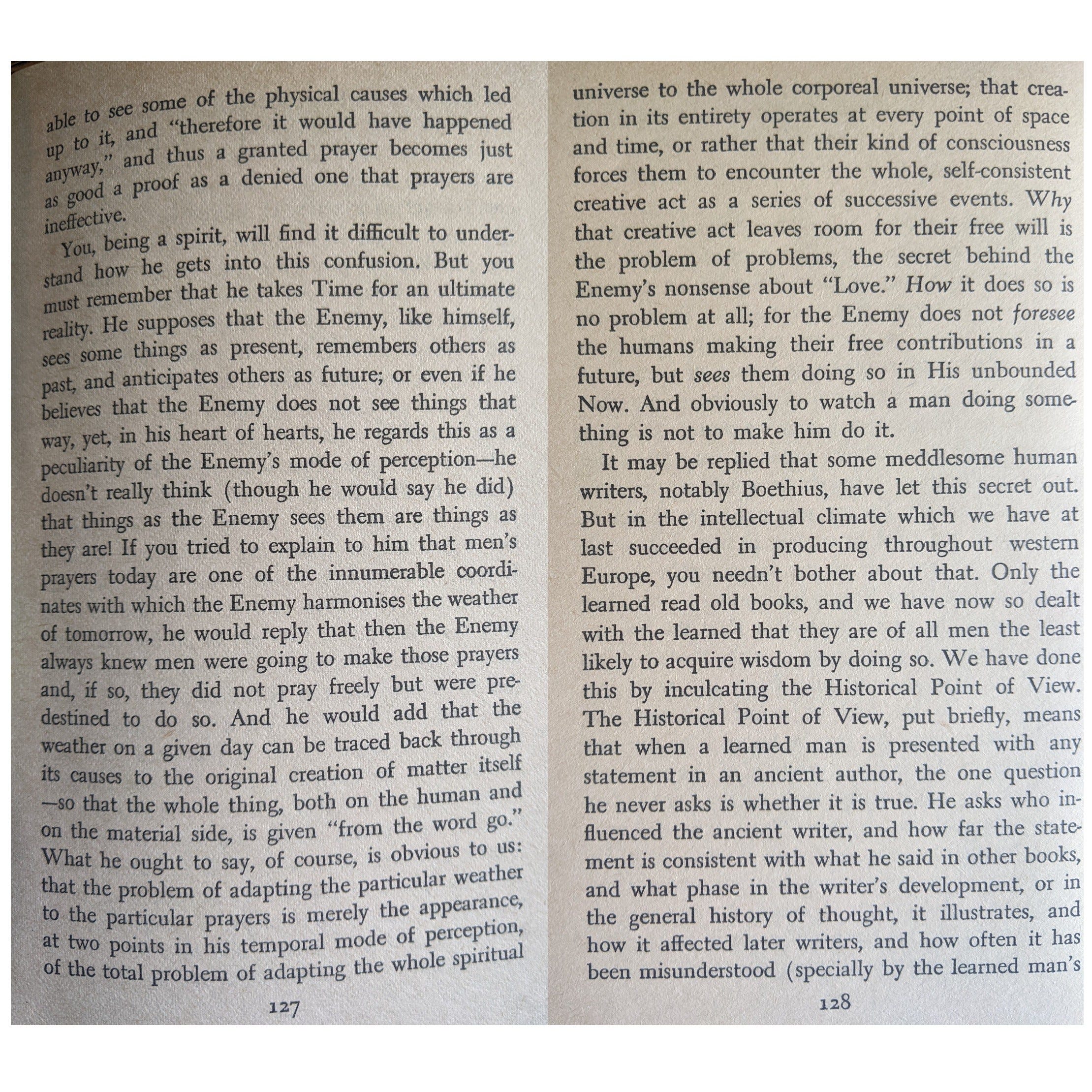
O for eyes to glimpse the kindnesses surrounding us in our despair. O for companioning books and ceaseless letters, pencil parties, pizza liturgies, pie chefs who stand poised with whipped cream. So often it’s the slightest acts that make all the difference. Words have been my enduringest sustenance over the past year, a note, a verse, a song, a poem, a prayer, faithfully reminding me that God is kind and, crowning mercy of all, prefers my brokenness.2 He isn’t waiting for me to do anything. The doing is finished. At the end of my rope, I can croon as peacefully as the psalmist a few verses later, “I am an olive tree.”3 Protect me by extinguishing my dreams of being elsewhere, prays a pastor friend. Yes, dear Jesus, let me dwell in your unbounded Now.
Annie Dillard, The Writing Life
Psalm 51:17
Psalm 52:8
Housekeeping, my dear, is never mere.
Your words were a gift to me this morning. Praise God for your writing. You, your story, your words are giving a lot of lift today—I hope you can feel that too.